
Rehoboth, MA
Rehoboth, MA Accessory Dwelling Unit (ADU) Rules
City Acceptance Rating: 2/10 (10 is most accepting)
Last updated: 10.29.2024
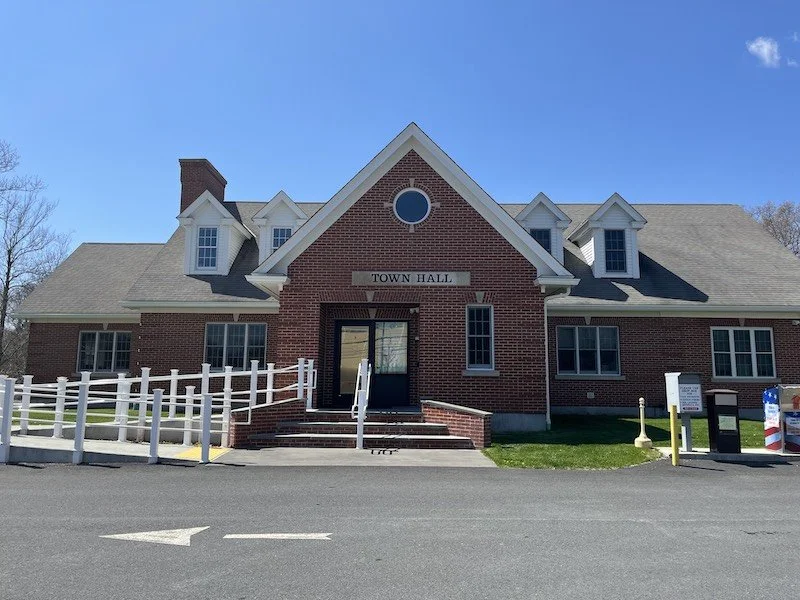
Image source: Massachusetts Municipal Association
What You Need To Know
Currently not in compliance with the Massachusetts Affordable Homes Act.
In-law apartments are the only defined unit type in Rehoboth and can not must be used as an extension of the main dwelling.
Type of ADU Permit Required
Currently, a special permit is required, but that will have to change once Rehoboth rewrites their rules to be compliant with the state guidelines.
ADU Rules
Definition: An in-law apartment is an extension of a single-family dwelling providing facilities for sleeping, eating, bathing, and living.
Egress Requirements: The in-law unit must have a code-compliant means of egress through the main dwelling; garages or service areas cannot serve as the primary egress.
Size Limit: The total livable area of the in-law apartment cannot exceed 750 square feet.
Rental Restriction: The in-law apartment cannot be rented as a separate or independent unit from the main dwelling.
Unit Limitation: Only one in-law apartment is allowed per single-family dwelling.
Notarized Letter Requirement: Before a building permit is issued, the owner must submit a notarized letter stating:
The owner will occupy one of the dwelling units as their primary residence, except for temporary absences.
The in-law apartment is an extension of the single-family dwelling and is not an independent rental unit.
Recording Requirement: The notarized letter must be recorded in the County Registry of Deeds or Land Court within the property's chain of title.
Resources:
Hanover, MA
Hanover, MA Accessory Dwelling Unit (ADU) Rules
City Acceptance Rating: 2/10 (10 is most accepting)
Last updated: 10.29.2024

Image source: Wikipedia
What You Need To Know
Currently not in compliance with the Massachusetts Affordable Homes Act.
ADUs currently are only allowed to be built for families to live closer to one another. Also, ADUs can only be created within an existing single family home.
Type of ADU Permit Required
A special permit is needed and the owner(s) must file a Declaration of Covenants at the Plymouth County Registry of Deeds stating that the use of the ADU shall be restricted to relatives of the owner.
ADU Rules
Definition and Permitting: ADUs must be self-contained housing within a single-family dwelling (not in accessory structures) and require a special permit from the Zoning Board of Appeals.
Occupant Requirement: ADUs are designated for individuals related to the primary owner-occupant by blood, marriage, or adoption.
Limitations on Units: Only one ADU is allowed per dwelling and per residential lot.
Owner Occupancy: The owner must occupy one of the units as their primary residence, with exceptions for temporary absences.
Exterior Access: New exterior stairs for the ADU must be located on the side or rear, unless otherwise required by building codes.
Parking: Off-street parking must be provided for both owner-occupants and tenants; specific requirements are determined by the Zoning Board of Appeals.
Size Limits: ADU size is capped at 33% of the gross area of the primary residence (or 800 square feet, whichever is smaller).
Bedroom Limit: ADUs may have a maximum of two bedrooms.
Code Compliance: ADUs must meet State Building Code, State Sanitary Code, and local bylaws.
Familial Affidavit: ADU applications must include an affidavit confirming the familial relationship between occupants and owners.
Annual Certification: Owners must re-certify occupancy and family status with the Building Commissioner yearly and notify of tenant changes within 30 days.
Recorded Declaration: Owners must file a Declaration of Covenants with the Plymouth County Registry, restricting ADU use to relatives of the property owner.
Existing ADUs: ADUs existing before the bylaw must comply with the State Building Code; each case is reviewed individually.
Administration: The Building Commissioner oversees administration, issues permits, and enforces compliance. No ADU may be occupied without a certificate of occupancy.
Continuous Use: Permits for construction or special use must adhere to subsequent bylaw amendments unless construction begins within six months.
Documentation Requirement: ADUs without proper documentation may incur fines as per Section 12.500 of the Hanover Zoning Bylaw.
Sale Restriction: ADUs cannot be sold separately from the principal dwelling.
Resources:
Dunstable, MA
Dunstable, MA Accessory Dwelling Unit (ADU) Rules
City Acceptance Rating: 2/10 (10 is most accepting)
Last updated: 9.13.2024

What You Need To Know
Currently not in compliance with the Massachusetts Affordable Homes Act.
Dunstable requires homeowners to jump through a number of hoops in order to build an ADU. If you have questions about the rules, please contact us. We would be happy to help!
Type of ADU Permit Required
A special permit is required through the zoning board of appeals.
ADU Rules
Except as otherwise provided in these Zoning Bylaws, not more than one accessory dwelling unit may be established on a lot [Amended 5/15/21]. The accessory dwelling unit shall not exceed 35% of the gross living space of the existing or expanded principal structure or 1,200 square feet, whichever is greater, and have no more than two bedrooms. The expansion of an existing structure to accommodate an accessory apartment shall not increase the gross floor space of the existing structure more than 15%.
The accessory dwelling unit may be located in the principal structure or in a detached accessory structure; provided, however, that an accessory dwelling unit may be located in such detached accessory structure only where such detached accessory structure has been in existence for at least ten (10) years. The burden shall be upon the applicant to demonstrate compliance with this subsection.
An accessory apartment shall be a complete dwelling unit with a separate entry, kitchen facilities, at least one bedroom, and a bathroom with sink, toilet and bathing facilities.
The external appearance of the structure in which the accessory dwelling unit is to be located shall not be significantly altered from the appearance of a single family structure or other structure ordinarily used and included in the context of single family dwellings, in accordance with the following:
The expansion of an existing structure to accommodate an accessory apartment shall not increase the gross floor space of the existing structure more than 15%.;
Any stairways or access and egress alterations serving the accessory dwelling unit shall be enclosed, screened, or located so that visibility from public ways is minimized;
Sufficient and appropriate space for at least one (1) additional parking space shall be provided by the owner to serve the accessory dwelling unit. Said parking space shall be constructed of materials consistent with the existing driveway and shall have vehicular access to the driveway;
All construction and/or renovation shall be performed in accordance with the applicable requirements of the State Building Code.
Prior to the conclusion of a Site Plan Review the owner must provide certification, by affidavit, that one of the two dwelling units shall be occupied by the owner of the property as his/her primary residence at least six months in any calendar year. In addition, such owner shall occupy such dwelling unit as his or her primary residence as a condition of the validity of the Special Permit. The owner must also own the entire lot, any structures thereon, and both dwellings.
The initial term and subsequent extensions of a special permit for an accessory dwelling unit shall terminate upon transfer of the ownership of the premises or when the owner no longer occupies the premises as his or her residence in accordance with Section (c) i above. Upon sale or transfer of the property to a new owner, the new owner must submit an affidavit to the Building Inspector of their intention to use one of the dwellings as their primary residence. A subsequent special permit may be granted after certification by affidavit is made by the applicant to the Board of Appeals that the accessory dwelling unit has not been extended, enlarged, or altered to increase its original dimensions, as defined in the initial special permit application.
Use and occupancy of any accessory apartment other than is authorized herein shall be grounds for revocation of any permit granted under this section.
Special Permits for an accessory dwelling unit may be issued by the Board of Appeals upon a finding that the construction and occupancy of the additional dwelling unit complies with foregoing provisions and will not be detrimental to the neighborhood in which the lot is located.
Nothing in this subsection 6.2.1 shall be construed to change or reduce any dimensional or area requirements of this Zoning Bylaw relative to single family dwellings and accessory structures thereto or to allow any uses not otherwise permitted by this Zoning Bylaw, other than accessory apartments as allowed.”
Resources:
Waltham, MA
Waltham, MA Accessory Dwelling Unit (ADU) Rules
City Acceptance Rating: 2/10 (10 is most accepting)
Last updated: 9.10.2024

Source: City of Waltham MA
What You Need To Know
Currently not in compliance with the Massachusetts Affordable Homes Act.
Currently, ADUs are only allowed within an existing single family home. There is currently just an ADU definition on the books in Waltham, but there is nothing that specifies a size maximum or minimum, rental rules, or owner occupancy.
Type of ADU Permit Required
ADUs require a special permit through the Board of Appeals.
ADU Rules
Accessory dwelling units. The Board of Appeals shall only grant such special permit when it has determined that the following limitations have been complied with and the Board shall include the following in its decision:
The proposed dwelling unit is in harmony with and will promote the purposes of this chapter.
The dwelling unit is accessory to the principal residence and either the dwelling unit or the principal residence is occupied by the owner of the lot on which the dwelling unit is to be located, which owner shall have owned the lot for not less than five years.
The dwelling unit is designed for and may be occupied by not more than two persons.
Adequate provision has been made for access to such dwelling unit, separate from the access of the principal residence.
No alteration to the exterior of the dwelling shall be made.
No increase in the floor area of the dwelling shall be made.
The construction, reconstruction and occupancy of the dwelling unit will not be detrimental or injurious to persons or property.
The lot on which the dwelling is located contains at least 20,000 square feet in Residence A-1 Districts and 15,000 square feet in Residence A-2 Districts.
The building in which the proposed dwelling unit is to be located existed on the date of the adoption of this subsection.
There shall be provided on the lot a parking area sufficient to hold at least four cars designed in accordance with Sections 5.3 through 5.35 and in such a manner that cars can exit onto the street in a forward direction.
Any special permit granted under this section shall require that the applicant request recertification of the permit at periods not exceeding three years, and failure to request such recertification shall cause the permit to lapse. The Board of Appeals may, in appropriate cases, impose further restrictions on the apartment or the lot as a condition of the special permit.
The special permit, if granted, shall clearly state that it is not transferable to a purchaser of the lot and shall require, as a condition of its validity, that a copy of the permit be filed in the Registry of Deeds by the applicant.
Resources:
Winchester, MA
Winchester, MA Accessory Dwelling Unit (ADU) Rules
City Acceptance Rating: 2/10 (10 is most accepting)
Last updated: 11/17/2025

Source: Town of Winchester Facebook
What You Need To Know
Winchester, like all of Massachusetts since the passage of the 2024 Affordable Homes Act, allows ADUs by right. Each town has slightly different rules surrounding ADUs, but they all must adhere to the framework outlined by the state. The rules for Winchester are outlined below.
Type of ADU Permit Required
ADUs in Winchester do not require special permits, and can be built using a traditional building permit. Residents are allowed to build one ADU per single-family home or duplex.
ADU Rules
An ADU can be maximum 900 square feet or half the Gross Floor Area of the main house; whichever is smaller.
In the case of duplexes, the ADU can be 900 square feet or half the Gross Floor Area of the larger unit; whichever is smaller.
ADUs may be attached, detached, or built within the main house.
Short-term rentals are not allowed - the minimum rental term for ADUs in Winchester is 31 days.
The main house and ADU must be owned by the same person(s).
Properties within ½ mile of a transit station do not require additional parking. Properties outside of that area require additional off-street parking (driveway or garage). e
Construction of a new garage for an ADU requires a special permit with the town.
ADUs should maintain the architectural style of the main house to the extent possible.
ADUs must have a separate entrance from the main house - attached ADUs can share an entry hall with the main house, but need a separate entry within the entry hall.
Exterior entrances for ADUs should be clearly secondary to the entry of the main house.
Exterior staircases above the first floor are only allowed within the home or on the side or back of the primary dwelling.
Resources:https://ecode360.com/42152935#42152939 (See Section 3.2.2)
Chelmsford, MA
Chelmsford, MA Accessory Dwelling Unit (ADU) Rules
City Acceptance Rating: 2/10 (10 is most accepting)
Last updated: 9.10.2024

Source: Town of Chelmsford Facebook
What You Need To Know
Currently not in compliance with the Massachusetts Affordable Homes Act.
Currently, Chelmsford allows a form of an ADU that is referred to as a Limited Accessory Apartment (LAA). These can only be constructed within or attached to a single family dwelling.
Type of ADU Permit Required
To construct an ADU within an existing dwelling, a building permit through the building inspector is required. A special permit is required to build an ADU attached to the existing home.
ADU Rules
An LAA as defined in Chelmsford is a self-contained unit within an owner-occupied single-family dwelling, providing space for bathing, cooking, and sleeping, and used exclusively by extended family members. It does not convert the dwelling into a two-family unit.
The LAA must have separate ingress/egress that maintains the single-family appearance. New entrances should be at the side or rear, with enclosed staircases and internal doorways between the LAA and the main unit.
The LAA size is limited to 750 square feet, excluding stairs and common areas.
Adequate off-street parking required, consistent with neighborhood character. Utilities must be connected to town sewer, and separate metering is not required unless mandated by the State Building Code.
Only one LAA per lot and can have no more than two occupants.
LAAs must be used only by extended family. Use restrictions must be recorded in the Registry of Deeds and include provisions for owner-occupancy and notice to potential buyers.
The Building Inspector issues permits by right. Special permits are handled by the Zoning Board of Appeals, which also records restrictions in the Registry of Deeds.
Applicants must submit architectural plans, site plans, names of residents, and an executed use restriction.
Special permits are based on zoning bylaws. The Zoning Board of Appeals may allow deviations for accessibility features.
New owners must file applications and inspections will ensure compliance. Violations may result in permit lapses, fines, and required special permits for continued use.
Resources:
Pembroke, MA
Pembroke, MA Accessory Dwelling Unit (ADU) Rules
City Acceptance Rating: 2/10 (10 is most accepting)
Last updated: 8.15.2024

Source: Town of Pembroke
What You Need To Know
Currently not in compliance with the Massachusetts Affordable Homes Act.
Currently, there are some hoops to jump through with ADUs in Pembroke. In addition to requiring a special permit, owners must sign a 15 year use restriction and agree to a maximum rent to be charged. ADUs must be rented to a person having an annual income of no more than 80% of the area median income. The Pembroke Housing Authority will monitor compliance with the ADU rules.
Type of ADU Permit Required
ADUs are allowed by special permit through the Zoning Board of Appeals in Pembroke.
ADU Rules
ADUs may be allowed on lots with at least 20,000 square feet of contiguous upland except for ADUs already in existence prior to the current ordinance.
The owner of the property must occupy the primary dwelling and rent the ADU.
The ADU cannot be larger than 800 square feet.
ADUs are limited to one bedroom and two occupants.
Two parking spaces must be provided for the ADU
An ADU must be attached to the existing single family home.
Resources: