Massachusetts Just Made ADUs a Whole Lot Easier and More Affordable
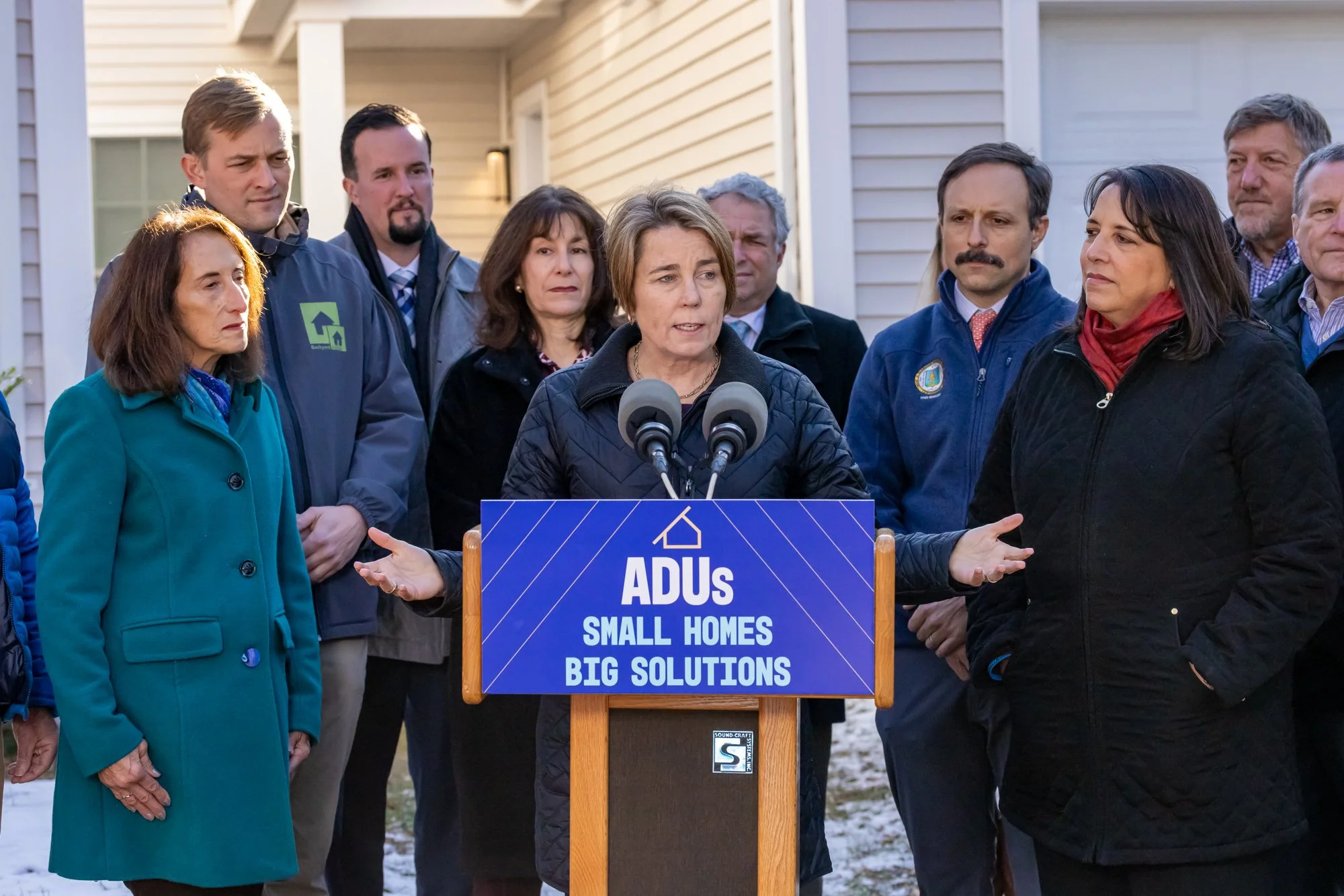
The administration in Massachusetts got this one right. The newly announced ADU initiatives are a big win for families, communities, and housing advocates. These programs make Accessory Dwelling Units more accessible to the average homeowner, and may even unlock a new path to affordable homeownership.
While final details are still being finalized by MassHousing and the HELOC, what’s already clear is very encouraging. Here’s what to know.
1. Big News on Financing
Homeowners could soon access up to $150,000 for attached ADUs and up to $250,000 for detached units. This is more generous than anticipated, and importantly, the funding will come through local commercial banks rather than slow-moving government channels. That means more efficiency and fewer bureaucratic headaches.
Key details such as interest rates and loan terms are still to come. But if we see rates around 4 percent or lower, with 25- to 30-year terms, families could finance a high-quality 900 to 1,000 square foot ADU for less than $2,000 per month. That is a real shot at stable housing for many.
2. Support Before You Build
Getting started is often the hardest part. The new program includes funding for resource centers and early-stage technical assistance, so more people can begin their ADU journey with the right support.
This work fits seamlessly into our own efforts at Backyard ADUs. We are partnering with MassCEC to create a modular ADU resource center for the Pioneer Valley. With a $500,000 grant already secured, we are building the tools and guidance to simplify the process for everyone.
3. Free ADU Plans, for Everyone
The state is also launching an ADU Design Challenge that will award $60,000 in prize money to top designs across several categories. The catch is a good one: designs must be released to the public.
That means homeowners across Massachusetts will have access to high-quality architectural plans without the usual $20,000-plus price tag. It is a creative, cost-effective way to spark innovation and lower the barrier to building.
What This Means for 2026
These programs will open new possibilities for families to create housing for aging parents, returning adult children, or long-term rental income. We are preparing to increase our design, permitting, and build capacity across Massachusetts to meet this moment.
We are also hiring throughout 2026. If you are looking for a new kind of career that helps people live more connected lives, we’d love to hear from you.
Let’s build a better kind of home, together.